Taoist Funeral Rites Checklist for Families
When a loved one passes, Taoist funeral customs can feel especially difficult to manage because grief and ritual often arrive at the same time. A taoist funeral rites checklist gives families a clear way to understand what needs attention first, what can be decided later, and which traditions may vary based on dialect group, temple guidance, and family practice.
In many Taoist funerals, there is no single fixed formula that applies to every household. The rites may differ depending on whether the family follows Hokkien, Teochew, Cantonese, or Hakka traditions, whether a priest is engaged, and whether the funeral is held at a funeral parlor, void deck, landed home, or another approved venue. That is why a checklist is helpful – not to reduce the ceremony to a set of tasks, but to make sure the funeral is carried out with dignity, order, and proper respect.
Why a taoist funeral rites checklist matters
Families are often making decisions within hours of a death. At that point, even simple questions can feel heavy. Should the body be sent for embalming? Which prayers are required? What offerings need to be prepared? Who arranges the hearse, permits, and cremation slot? A proper checklist brings emotional relief because it separates urgent logistics from ceremonial choices.
It also helps prevent common problems. Some families assume every Taoist funeral uses the same altar setup, paper offerings, chanting schedule, and mourning attire. In practice, there can be meaningful differences. A reliable funeral director will usually confirm the family’s dialect background, temple preferences, and budget before finalizing the arrangements.
Immediate steps after the passing
The first stage is administrative and practical. Before any rites begin, the death must be formally handled and the deceased must be transferred with care. If the passing happens at home, in a hospital, or overseas, the process will differ slightly, but the first concern is always professional coordination.
A useful checklist at this stage includes the death certification process, body transfer, embalming or dressing arrangements, and confirmation of the wake venue. The family will also need to decide whether the funeral will end in cremation or burial, since this affects scheduling, transport, and ceremonial flow.
If the family wants Taoist rites observed correctly, this is also the point to engage a funeral provider familiar with Taoist practice. Waiting too long can create unnecessary stress, especially if specific prayer timings, priest availability, or venue requirements are involved.
Core items in a Taoist funeral setup
Most families want to know what is typically included in a Taoist funeral arrangement. The exact items vary, but the ceremonial setup usually centers on the deceased, the altar, prayer elements, and mourning space for relatives and visitors.
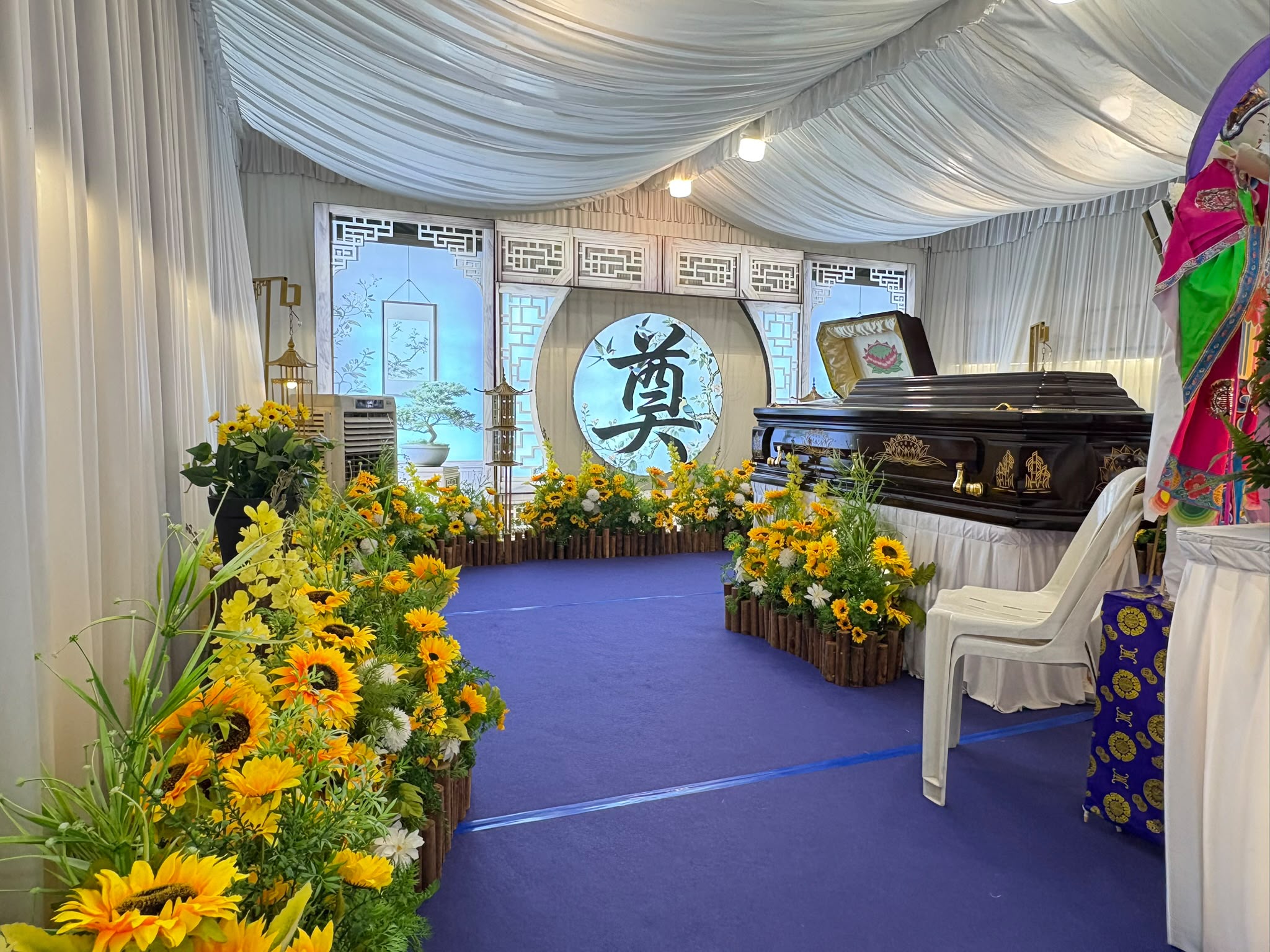
A standard Taoist funeral setup often includes the casket, backdrop and tentage if the wake is held outside, altar table, incense burner, candles, joss offerings, memorial portrait, condolence book, and chairs for visitors. Families may also prepare paper house items, gold and silver paper, clothing for the deceased, and prayer items used during chanting rituals.
The visible setup matters, but so does the unseen work behind it. Transport, body care, permit handling, scheduling, and coordination with priests or temple representatives are just as important. When these details are managed well, the family has more room to focus on mourning and receiving guests.
The religious rites and what they usually involve
Priests, chanting, and prayer timing
Taoist funeral rites commonly include chanting led by Taoist priests. These prayers are meant to guide the deceased on their journey and to honor them properly. The number of sessions may depend on the funeral package, the family’s customs, and the planned length of the wake.
Some families request simpler rites, while others prefer a fuller ceremonial structure with opening prayers, daily chanting, final night rituals, and send-off prayers before cremation or burial. Neither choice is automatically more respectful. It depends on the family’s beliefs, budget, and the instructions received from their spiritual advisers.
Offerings and ritual items
Offerings are an important part of Taoist practice. These may include incense, candles, fruits, tea, food offerings, joss paper, and symbolic paper items. In some households, the types of offerings are carefully chosen according to tradition. In others, the family keeps things more modest while still observing the essential rites.
This is where experienced guidance matters. Overbuying ritual items can create waste and cost, while underpreparing can leave families worried that they have missed something important. A good checklist helps the family distinguish between customary essentials and optional additions.
Mourning customs for family members
Immediate family members may be asked to wear mourning clothes, armbands, or pins according to custom. The details can vary. Certain traditions also set expectations around where family members stand during prayers, when they bow, and how they receive guests offering condolences.
These customs are easier to follow when someone is there to guide the sequence. During a wake, relatives are often tired, emotional, and managing many visitors. Calm direction can make the rites feel orderly rather than overwhelming.
Practical checklist for funeral day planning
A taoist funeral rites checklist should also cover the funeral day itself, because the final send-off often involves the most moving and time-sensitive parts of the ceremony.
The family will usually need to confirm the service timing, hearse arrangement, route, prayer sequence, pallbearer coordination if needed, and final offerings before departure. If cremation is selected, the crematorium booking and arrival time must be confirmed carefully. If burial is planned, cemetery arrangements and documentation must also be in place.
There may also be customs surrounding the closing of the casket, final viewing, collection of offerings, and post-funeral cleansing rites for family members. Some families observe these closely, while others choose a more simplified version. It is best to ask what is required by custom and what is optional so the family can make informed decisions.
What families in Singapore often need help coordinating
Although Taoist rites are deeply spiritual, the stress on most families comes from operations. They need someone to manage the wake setup, casket arrangements, embalming, transport, permits, scheduling, and cremation or burial coordination without repeated follow-up.
In Singapore, space rules, venue permissions, and timing restrictions can also affect the funeral plan. A ritual that is fully appropriate in one setting may need adjustment in another. For example, a large outdoor wake may allow for more elaborate setup, while a funeral parlor arrangement may be more structured. The rites can still be respectful in either case, but the planning needs to match the venue.
This is also why transparent pricing matters. Taoist funerals can involve many components, and families deserve to know what is included from the start. Clear explanations reduce confusion and help families choose between a simpler arrangement and a more elaborate ceremonial setup based on need, not pressure.
How to use this checklist without losing the human side
A checklist is not meant to make the funeral feel mechanical. Its purpose is to hold the practical burden so the family can focus on remembrance. That means using the checklist as a guide for decisions such as body care, wake venue, priest coordination, altar setup, offerings, funeral day transport, and final disposition, while still allowing room for family tradition and emotional needs.
If relatives disagree on certain rites, it often helps to separate what is religiously necessary from what is customary preference. Some decisions truly affect ritual correctness. Others are family choices shaped by budget, time, or personal belief. Knowing the difference can ease tension during a sensitive time.
Families who want steady support often do better with one point of contact managing the funeral from start to finish. Providers such as Ang Brothers Funeral Services are often engaged for this reason – not only to arrange the ceremonial items, but to coordinate the full process with clarity, fairness, and respect.
The most helpful approach is a simple one: make sure the essential rites are observed properly, keep the arrangements honest and manageable, and let the ceremony reflect the life of the person being honored. When the planning is steady, families have more space to grieve, gather, and say goodbye in peace.