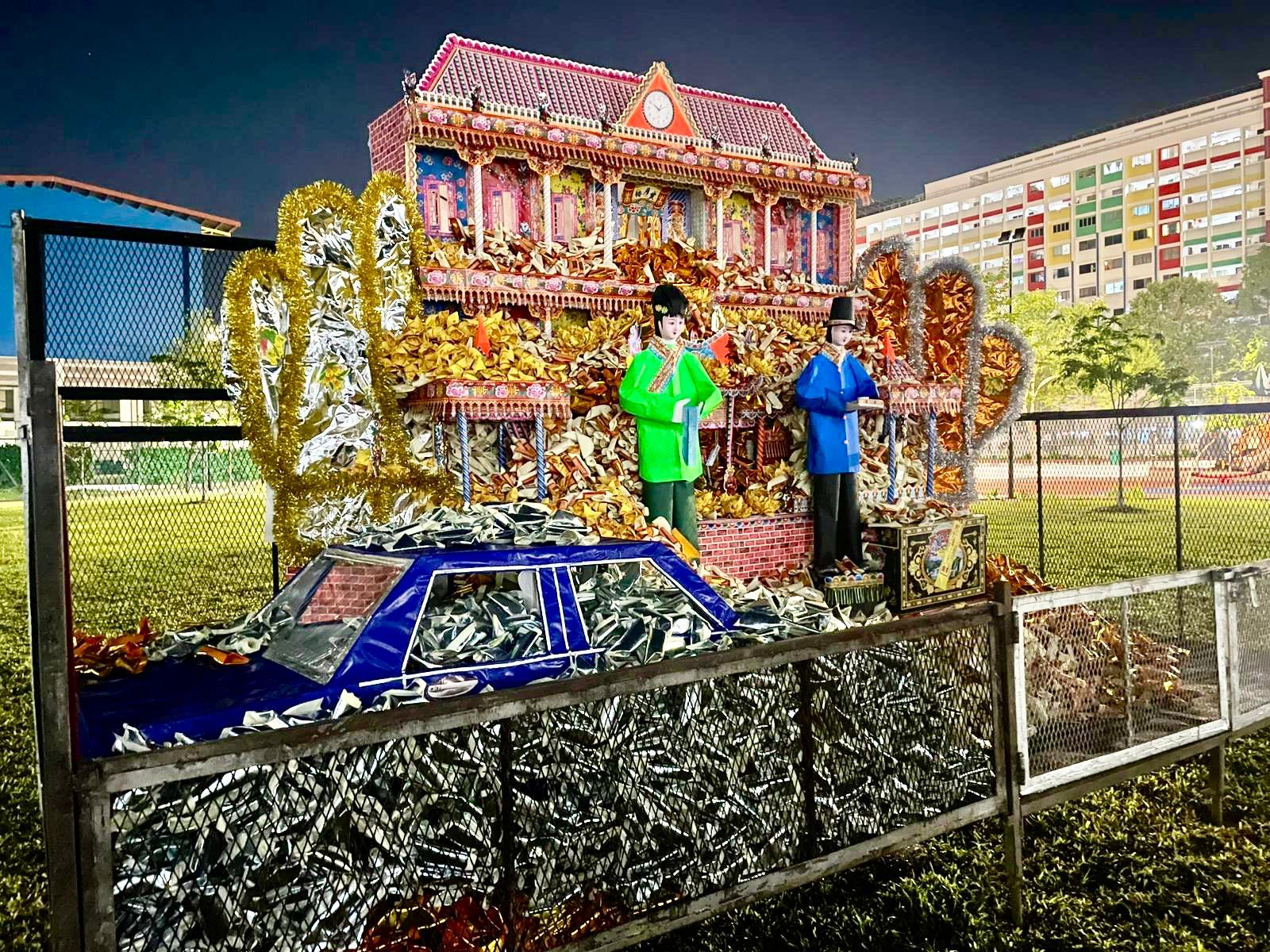
Some Chinese Taoist and Buddhist families use paper offerings such as joss paper, paper houses and paper cars at a funeral. For families who follow the custom, offering these items can express care for the person who has died. What is offered, when it is used and where any burning may take place depend on the family’s rites and the venue’s rules.
Common examples include joss paper (spirit money folded into ingots or stacked in bundles), paper houses of varying sizes, paper cars, and everyday items such as clothing or accessories. Some families choose modern items that reflect the person being remembered. There is no fixed list. The selection depends on the family’s tradition, the guidance of the presiding priest or monk, and what feels meaningful to those arranging the funeral.
Check the chosen package before ordering. Ang Brothers’ published Taoist package lists a paper house and car among its inclusions. The Simplified Basic Buddhist package lists paper products as extras available on request. Ask for the included pieces, sizes, extra costs and who prepares them.
Ask the officiant whether the rites call for burning and when it is appropriate. Separately, ask the funeral director and venue operator where it is permitted and what equipment or limits apply. Confirm the plan before ordering large pieces.
Where burning is permitted and under what conditions depends on the venue. HDB void decks, funeral parlours and private premises each have their own rules, and some locations restrict the size of items that can be burned or require a designated metal burner. The joint religious-federation advisory hosted by NEA advises using designated burners where they are provided, burning only in small quantities at a time, not burning directly on the ground, and not leaving the burner unattended. Ask the funeral director about the specific venue’s rules, any Town Council restrictions, and whether large items such as a paper house can be burned on site or need to go elsewhere.
Arranging a funeral, or not sure what to do next? Message us on WhatsApp or call 9871 8388. We answer at any hour.
Customs can vary between families, officiants and dialect traditions. Ask which pieces are meaningful for this funeral, which can be left out and who will guide the rites on the day.
No. Paper offerings are a custom observed in many Chinese Taoist and Buddhist funerals, but each family decides how much to include. Some families choose a full set of items; others keep it to joss paper alone or omit offerings entirely. The decision rests with the family and their officiant.
It varies by package. Ask for a written list of the included items and sizes. Check the price of any larger or custom pieces before agreeing to add them.
Not all venues permit open-flame burning, and those that do may impose conditions on the size of items, the type of container used, and the time of day. Check with the funeral director and the venue or Town Council, especially for HDB void decks where local rules apply.
The family decides, usually guided by the presiding priest or monk and the funeral director. The choice depends on the family’s tradition, dialect customs, and what feels appropriate for the person being remembered. There is no universal checklist or prescribed sequence.
Planning paper offerings for a Taoist funeral?
See how the priests, merit rites, offerings and complete wake are arranged by dialect tradition.
If you need help, we are here at any hour.
Speak to us about arranging a funeral. No pressure and no obligation, just clear answers and immediate help.
Speak to us now. No pressure, no obligation, just clear answers and immediate help.