How to transfer deceased overseas: what the process usually involves
International repatriation means transporting a person who has died from one country to another, either for burial, cremation, or final rites. The exact requirements depend on the country where the death occurred, the destination country, the cause of death, and whether the remains will be sent as a body or as cremated ashes.
Most families assume this is only about booking a flight. In reality, airlines will not accept human remains without the required documents, preparation standards, and cargo arrangements. There are also local legal steps before the deceased can leave the country, and receiving-country requirements before arrival.
In most situations, the process includes official death registration, obtaining permits, embalming when required, securing a suitable casket or container, preparing a coffin for air transport, and arranging customs clearance on both sides. If any document is missing or inconsistent, the transfer may be delayed.
First decisions to make after a death overseas
The first priority is to confirm where the deceased is being held and who has legal authority over the release. This may be a hospital, coroner, morgue, or local authority. If there is an ongoing investigation or postmortem requirement, the timeline may change.
At the same time, the family should decide whether they want the deceased repatriated as full remains or cremated locally and returned as ashes. This decision affects timing, budget, documentation, and religious considerations.
For some families, bringing the deceased home in a casket is deeply important for wake services and traditional final rites. For others, returning ashes may be faster, less costly, and more practical, especially if travel restrictions, local regulations, or budget concerns are involved. There is no single right choice. It depends on your faith, family preferences, and the legal rules of both countries.
The documents usually required
When families ask how to transfer deceased overseas, the most common point of confusion is documentation. The exact paperwork varies, but several items are commonly needed.
You will usually need the official death certificate, passport or identification of the deceased, a permit to remove or export the remains, and documents confirming embalming or sealing of the casket if the body is being flown. Some countries also require a non-contagious disease certificate, a coroner’s clearance, or consular paperwork from the embassy of the destination country.
If the deceased is being returned to Singapore or sent from Singapore to another country, local health and port authority requirements must also be followed. Names, passport numbers, and dates must match across all documents. Even a small error can cause a hold at cargo acceptance or customs clearance.
This is one reason families often rely on an experienced funeral director. Good coordination is not just about speed. It is about getting every detail right the first time.
Preparing the deceased for air transport
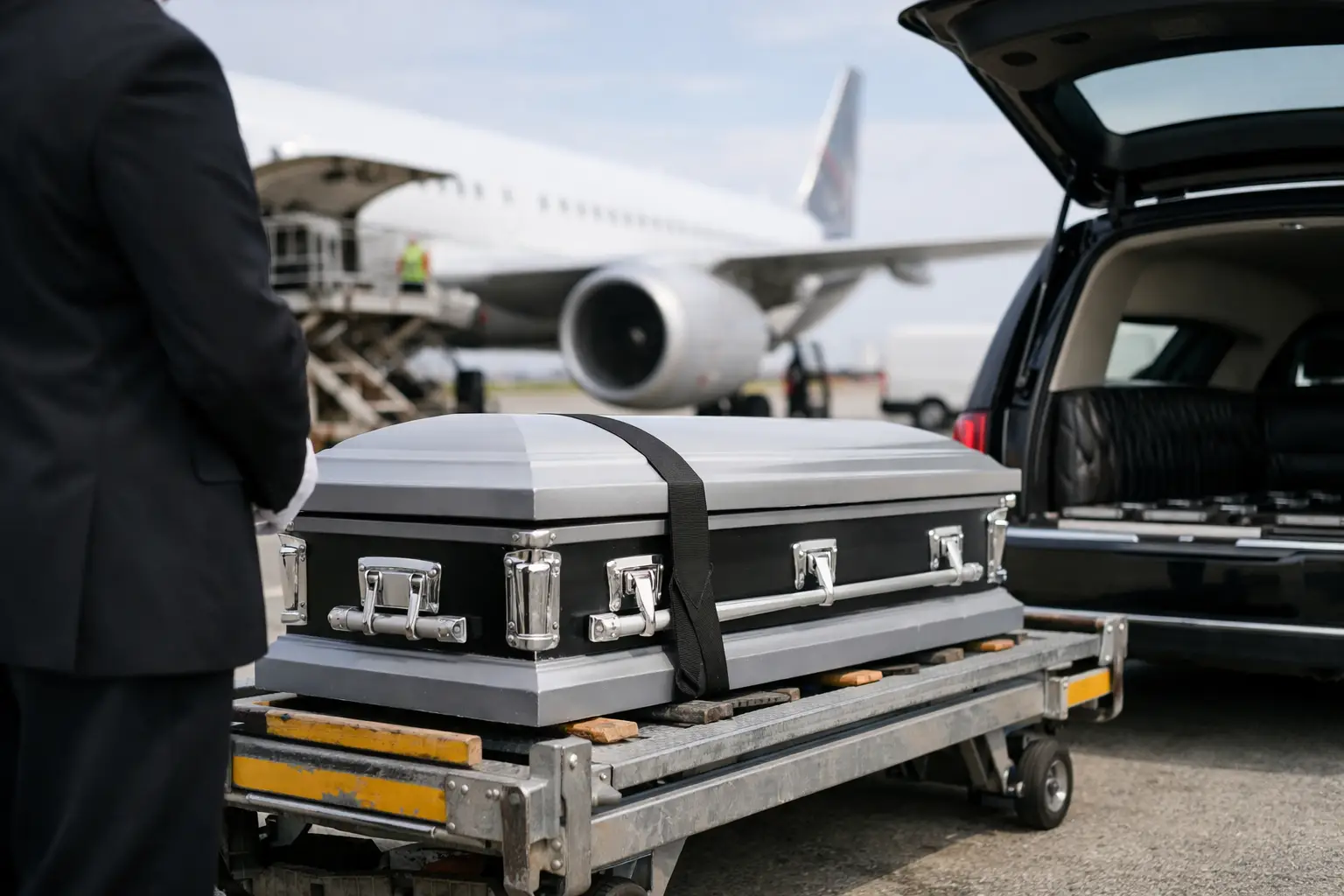
If the deceased will be sent as full remains, preparation standards are stricter than for local funeral transport. In many cases, embalming is required. The body is then placed in an approved casket, often with a zinc-lined or hermetically sealed inner container depending on airline and destination rules.
The casket also needs to meet cargo handling standards. Some airlines require an outer wooden crate for added protection during transit. Weight, dimensions, and route availability matter because not every airline accepts human remains, and not every route can accommodate them directly.
This part of the process should be handled carefully and respectfully. Families sometimes worry that speed means losing dignity. In practice, a professional repatriation team should be able to move efficiently while still maintaining proper care, presentation, and ceremonial respect.
Airline and customs coordination
Once the documents and preparation are complete, the next step is booking the shipment through an airline cargo department. Human remains are not handled like ordinary passenger baggage. They are transported under special cargo procedures, with strict acceptance rules and advance paperwork review.
Timing matters here. Some flights may not be available every day, and direct routes are not always possible. A transit stop can add complexity because the rules of the transit country may also apply. If the receiving funeral home or agent is not ready on arrival, storage charges or clearance delays may follow.
On arrival, customs and local authorities usually need to review the documents before release. The receiving funeral provider then takes over transport to the funeral home, place of worship, crematory, cemetery, or family residence where permitted.
How long does it take?
Families naturally want a clear answer, but timing depends on several factors. If the death was expected, documentation is straightforward, and flights are available, repatriation can sometimes be arranged within a few days. If there is a coroner’s inquiry, public health concern, missing documents, embassy processing delay, or limited flight schedule, it may take longer.
Returning ashes is often faster than returning full remains, but not always. Some jurisdictions have waiting periods before cremation can be authorized. Religious requirements may also influence what is possible.
A responsible funeral provider should explain what can be done immediately, what depends on third-party approval, and where delays may happen. Families deserve realistic timelines, not false reassurance.
Cost factors families should understand
International repatriation costs vary widely. The final amount depends on the country of death, document fees, embalming requirements, coffin specifications, airline cargo charges, local transport, consular processing, and receiving-country handling.
A lower headline quote does not always mean lower total cost. Some providers exclude items such as after-hours collection, embassy documentation, airport handling, sealing certificates, or receiving agent charges. Transparent pricing matters because families are already under pressure and should not be surprised by added fees later.
If budget is a concern, ask whether returning ashes is a suitable alternative, whether certain ceremonies can be arranged after arrival instead of before departure, and which charges are fixed versus variable. Clear answers help families make practical decisions without feeling rushed.
Religious and cultural considerations
For many families, how the deceased is transferred matters as much as when. Buddhist, Taoist, Catholic, Christian, Soka, and secular families may each have different expectations around embalming, viewing, prayer services, handling of the body, and timing of burial or cremation.
Some traditions prefer the body to be returned as soon as possible. Others place importance on specific rites once the deceased reaches home. In cross-border cases, there can be tension between religious preference and legal requirement. For example, a faith may prefer minimal delay, but authorities may require embalming, inspection, or sealed-casket transport.
This is where experienced guidance becomes especially valuable. The goal is not to force a standard process on every family, but to preserve dignity while working within legal limits.
Choosing professional help for overseas transfer
When deciding who should manage the transfer, look for a funeral provider that handles both logistics and family communication well. You need more than transport arrangements. You need someone who can coordinate documents, explain options plainly, liaise with overseas parties, and keep the process moving without losing care and respect.
Ask whether they manage end-to-end repatriation, whether they can coordinate with hospitals and embassies, whether they support different faith requirements, and whether pricing is provided clearly before work begins. A one-stop provider can reduce the number of calls, handovers, and misunderstandings at a time when families are least able to manage them.
For families in Singapore, providers such as Ang Brothers Funeral Services often support both the practical and ceremonial sides of repatriation, helping ensure that transport, permits, and final arrangements are aligned.
A calmer way through a difficult moment
If you are facing the question of how to transfer deceased overseas, try not to carry the entire process alone. The paperwork is demanding, the timing can be sensitive, and every country has its own rules. But with the right support, it is possible to bring your loved one home with dignity, proper care, and fewer complications for the family left to grieve.