
We handle the full process of transporting a loved one across borders, with care and without the family carrying the burden. One call, and we take it from there.
Repatriation is the transport of a person who has passed from Singapore to another country, or the receiving of a loved one into Singapore from abroad. Families turn to it when a loved one is to be laid to rest in their home country, or when someone who passed overseas is being brought back to Singapore.
It is a process that requires careful coordination. Embalming has to be prepared specifically for transport, the correct documentation has to be in order, and the embassy, consulate and airline arrangements all have to line up. Ang Brothers handles every part of it end to end, so the family is never left to navigate permits, paperwork or airline cargo desks on their own at a time like this.
"Losing a loved one while in a different country was overwhelming. Ang Brothers and Mr Casper helped and guided me through the entire process. So grateful for their support."
The complete package, from outbound and inbound documentation to how we stay with you throughout, is set out on its own page so every inclusion and the pricing are easy to follow.
Families feel steadier once they can see the whole journey laid out. Here is how a repatriation usually unfolds.
You call our 24 hours hotline and tell us the destination, or where the loved one is being brought back from. We collect the deceased and explain the steps, the documents and the likely timeline straight away.
The deceased is embalmed and prepared for transport, then placed in an air transport coffin or container that meets airline and destination requirements. In parallel, we prepare the export or import permits, the death certificate, the embalming certificate and the other paperwork the journey calls for.
We liaise with the relevant embassy or consulate for the endorsements that are required, and we book the airline and cargo space. We also coordinate with the receiving funeral home at the destination, so a team is ready on the other side.
On the day, we handle the collection or delivery at the airport and see the loved one safely onto the flight, or receive them when they arrive into Singapore. From start to finish, the family has one number to call.
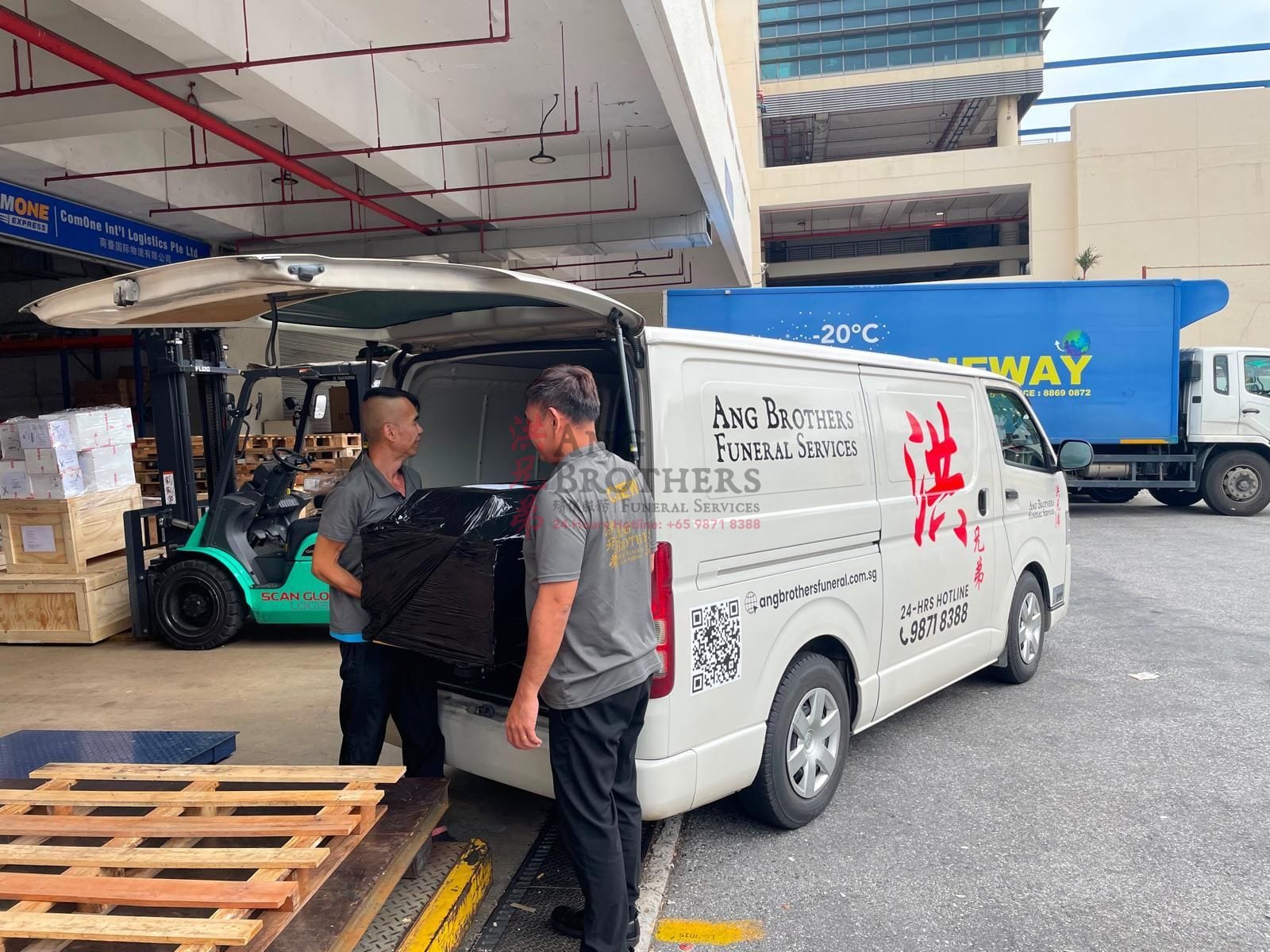
Our own team brings your loved one to the airport cargo complex and handles the check in, the weighing and the paperwork at the freight desk, so the formal side of the journey is taken care of without the family ever having to be there.
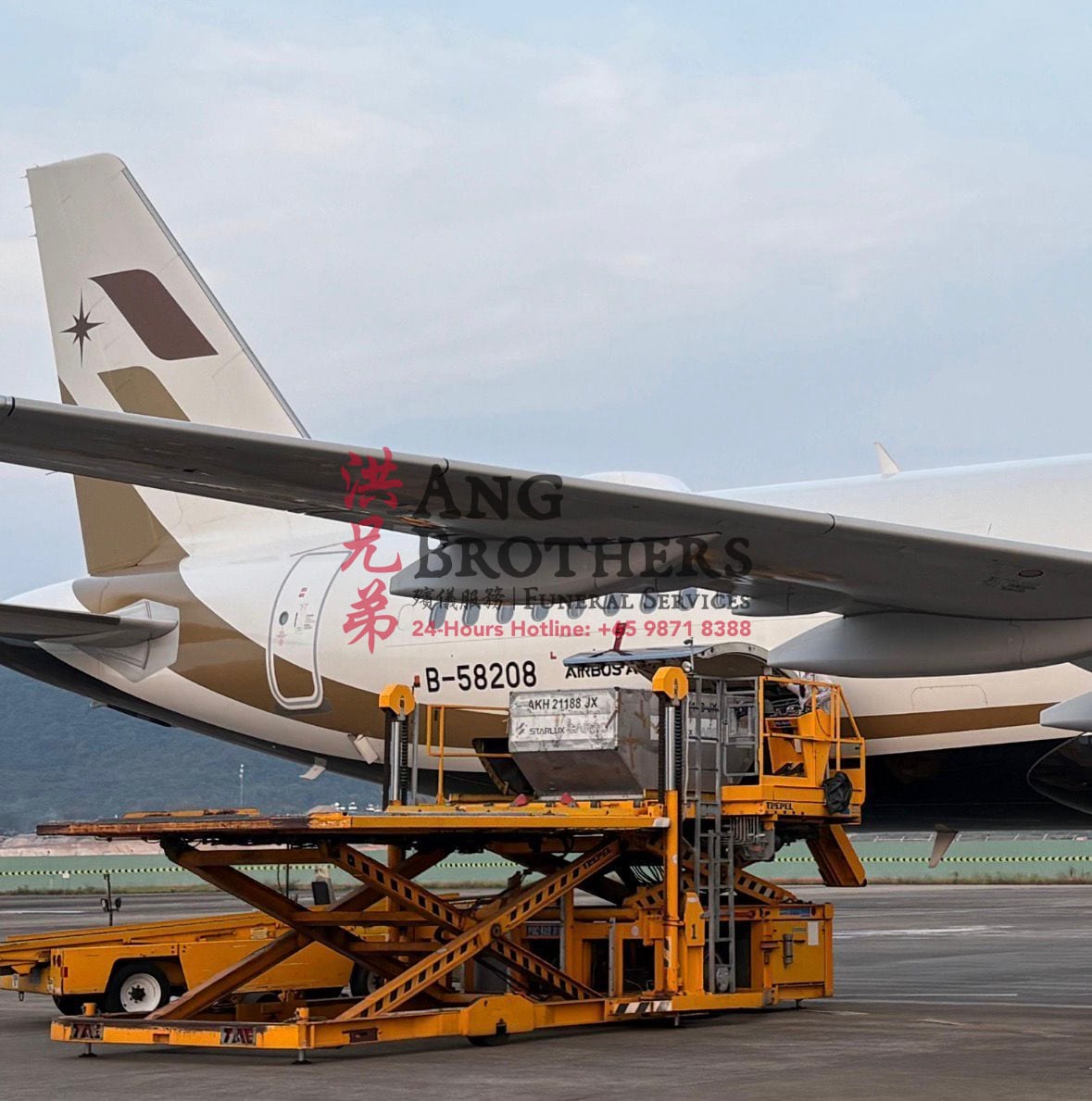
We handle the collection or delivery at the airport ourselves, the cargo space booked and every document cleared, so a loved one is received or sent onward safely, without the family ever having to navigate an airline cargo desk.
Most repatriations are by air, whether we are sending a loved one onward to their home country or receiving someone into Singapore from abroad. We prepare the embalming and the air transport coffin, clear the permits and embassy endorsements, and book the cargo space, so the journey is handled end to end.
For Malaysia, the journey is often made by road rather than by air. We arrange the hearse, the border documentation and the crossing, and coordinate with the receiving family or funeral home across the causeway.
Where a family prefers, we can arrange the cremation first and repatriate the ashes instead of the body. This is usually simpler and less costly to transport, and we prepare the certificates and airline paperwork the ashes need to travel.
Call Ang Brothers on our 24 hour hotline at 9871 8388. As an experienced repatriation specialist, we collect the deceased, prepare the embalming for transport, arrange the export or import permits and embassy endorsements, and book the airline, so your family makes one call and we carry the rest.
Any country, worldwide. We have arranged repatriation across Asia, Europe, the Americas, Australia and beyond, and we coordinate with the receiving funeral home at the destination so a loved one is cared for on arrival.
Yes. We arrange inbound repatriation into Singapore from anywhere in the world, coordinating with the funeral home abroad, the airline and the documentation, and we receive your loved one at the airport when they arrive.
Yes. Where a family prefers, we can arrange the cremation first and repatriate the ashes, which is usually simpler and less costly to transport. We prepare the certificates and the airline paperwork the ashes need to travel.
Yes. For Malaysia, repatriation is often done by road rather than by air. We arrange the hearse, the border documentation and the crossing, and coordinate with the receiving family or funeral home in Malaysia.
It usually takes a few days, depending on the destination, the documentation required and flight availability. Once you call, we begin the documentation and embassy steps straight away to keep things moving.
Export or import permits, the death certificate, an embalming certificate, a coffin sealing certificate and embassy or consulate endorsements, among others. We prepare and handle all of them for you.
From $2,000, depending on the destination, the airline and the documentation involved. Call or WhatsApp us and we will give you a clear figure for the country you need.
It is a sealed, often zinc lined coffin or container that meets airline and destination requirements for carrying a loved one by air. We provide it and handle the sealing certificate as part of the repatriation.
Speak to us now. No pressure, no obligation, just clear answers and immediate help with your repatriation arrangements.