
Buddhist Funeral Services Singapore Guide
When a loved one passes, families often need to make decisions within hours, not days. For those arranging buddhist funeral services singapore families can rely on, the immediate questions are usually practical as much as emotional – what rites should be observed, how quickly must arrangements begin, what is included, and how do you make sure everything is handled with respect.
A Buddhist funeral is not only a ceremony. It is a period of care, prayer, and proper send-off that reflects the values of compassion, merit, and remembrance. In Singapore, where customs can vary by family background, temple practice, and dialect group, a well-coordinated funeral matters because it helps the family focus on mourning while the ceremonial and logistical details are managed correctly.
What Buddhist funeral services in Singapore usually include
Most families need more than a venue and a casket. Buddhist funeral services in Singapore typically involve end-to-end coordination from the time of passing until cremation or burial, with the wake and final day rites planned around the family’s religious preferences and practical needs.
This usually begins with collection of the deceased from the home, hospital, or care facility, followed by transport to the funeral service provider’s care facility if embalming or preparation is required. From there, arrangements may include body preparation, dressing, casket setup, wake tentage or hall arrangement, altar placement, photo enlargement, candles, incense items, chanting coordination, funeral notice support, and transport for the final procession.
Families are often relieved to learn that the administrative side can also be handled together with the funeral plan. This may include permit coordination, booking a cremation slot, arranging ash collection, and advising on post-funeral steps. During a period of grief, having one team manage both rites and logistics reduces confusion and avoids repeated handovers.
The role of Buddhist rites and chanting
For many families, chanting is one of the most meaningful parts of the funeral. Monks may be invited to conduct prayers at the wake and again on the final day before cremation. These chants are commonly understood as a way to dedicate merit, express respect, and support a peaceful transition for the deceased.
That said, there is no single Buddhist funeral format that fits every family. Some prefer a more traditional setup with multiple prayer sessions and a longer wake. Others want a simpler arrangement that still preserves the essential rites. It depends on the family’s tradition, budget, and whether guidance has been given by a monk or temple elder.
This is where an experienced funeral director becomes especially important. The right provider will not push a fixed script. Instead, they will ask the right questions, explain what is customary, and help the family choose arrangements that are religiously appropriate without adding unnecessary complexity.
Wake setup and ceremony planning
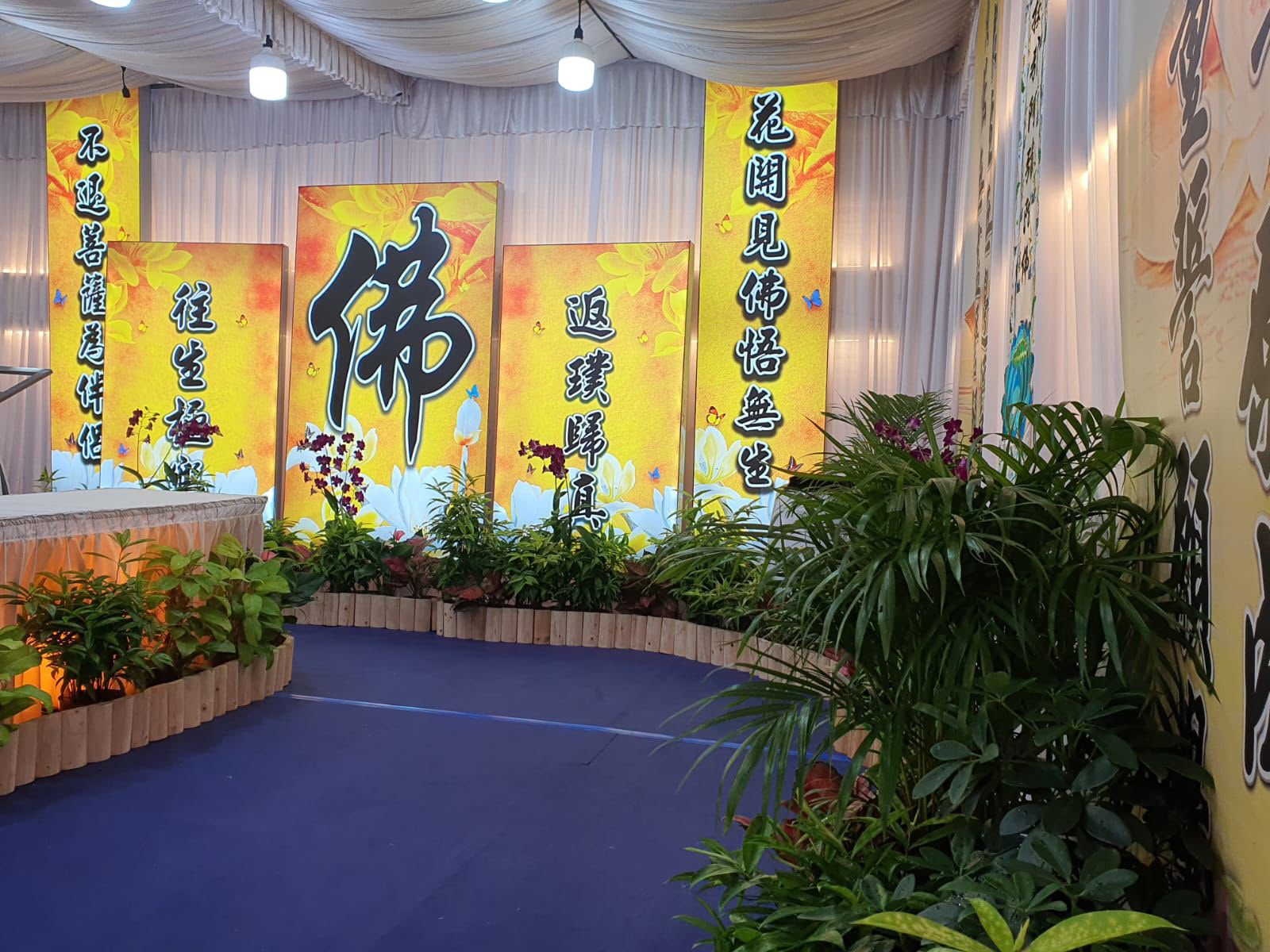
A Buddhist wake can be held in several settings in Singapore, including at a void deck, funeral parlor, landed property, or other approved location. The choice often depends on family preference, convenience for visitors, and timing. Each setting comes with different logistical considerations, from tentage and seating to lighting, accessibility, and ceremonial flow.
The altar setup is another key part of the arrangement. Depending on the family’s practice, this may include an image of the Buddha, offerings, incense, candles, flowers, fruits, and memorial tablets or prayer items. The visual setting should feel solemn and dignified, not crowded or improvised. Small details matter because they shape the atmosphere of the wake and the family’s peace of mind.
Funeral day coordination also requires careful planning. Guests, monks, vehicles, pallbearers, and the cremation schedule all need to line up properly. If timing is poorly managed, the family can feel rushed at exactly the moment they need steadiness. A professionally run service keeps the day orderly while allowing space for prayer, final respects, and family traditions.
Understanding costs without guesswork
One of the biggest concerns families have is pricing. This is understandable. Funeral arrangements often happen under pressure, and unclear quotations can create added distress. A trustworthy Buddhist funeral package should explain what is included from the start and make clear which items are optional.
Core costs commonly cover collection and transport, embalming or body preparation where needed, casket, wake setup, tables and chairs, altar items, candles and incense, service staff, hearse, and cremation day coordination. Additional charges may apply if the family requests extended wake days, premium casket selections, larger tentage, extra floral arrangements, or specific ceremonial additions.
There is no single right budget for every family. Some want a modest arrangement that remains respectful and complete. Others prefer a more elaborate wake to accommodate a large extended family or traditional practice. The key is transparency. Families should be able to see what they are paying for and make informed choices without feeling pressured.
Providers such as Ang Brothers Funeral Services are often valued for this reason – clear package structure, practical guidance, and no hidden costs. In difficult moments, honesty matters just as much as efficiency.
What families should prepare after a passing
In the first few hours after a death, most families are not thinking clearly, which is completely normal. A calm funeral provider should guide them step by step. In most cases, it helps to have the deceased’s identification details ready, along with any hospital or medical documents issued at the time of passing. The family should also consider whether the wake will be held at home, at a parlor, or another permitted location.
If the deceased had expressed Buddhist preferences in advance, those should be shared early. This may affect the chanting arrangement, altar setup, wake duration, and cremation timing. If there were no clear instructions, the funeral director can guide the next-of-kin through customary options in a respectful and practical way.
It is also helpful to identify one or two family decision-makers. Too many separate instructions can lead to confusion, delays, and avoidable stress. A single point of contact helps the funeral team carry out arrangements accurately while keeping the wider family informed.
Choosing the right provider for buddhist funeral services singapore families need
Not every funeral company handles Buddhist services with the same level of experience. Some can manage general logistics but may be less confident with ritual details, chanting coordination, or family-specific customs. When choosing a provider, families should look for both religious familiarity and operational reliability.
A capable team should be able to explain the service clearly, respond at any hour, coordinate permits and transport promptly, and manage the wake professionally from start to finish. Just as important, they should communicate with patience. Grieving families do not need sales language. They need clarity, steadiness, and respect.
It is also worth asking whether the provider offers flexible arrangements. A one-size-fits-all package may not suit every household. Some families need a direct cremation with selected Buddhist rites. Others need a full multi-day wake with ceremonial support and catering coordination. Good service means adapting to the family, not the other way around.
Why this support matters beyond the ceremony
A Buddhist funeral is not only about fulfilling custom. It gives family members a way to gather, honor a life, and move through the first days of loss with structure and support. When the service is handled well, it removes uncertainty at a time when everything else feels unsettled.
The strongest funeral support is often quiet. It is the hearse arriving on time, the altar prepared correctly, the chanting arranged without last-minute scrambling, the documents handled properly, and the family never having to ask twice. These practical details may seem small from the outside, but they are what allow a funeral to feel dignified and complete.
If you are arranging a Buddhist funeral, it is enough to take the next step and speak with a provider who can guide you calmly. In moments like this, clear help, respectful care, and honest coordination can make the burden lighter for everyone involved.