
Buddhist Funeral Rites Explained Clearly
When a loved one passes, families often need answers quickly. Buddhist funeral rites explained in a clear and respectful way can ease some of that pressure, especially when decisions about prayers, wake arrangements, cremation, and ceremonial timing must be made within hours.
In Singapore, Buddhist funerals can vary by tradition, family customs, dialect group, and temple practices. Some services are simple and quiet. Others are more elaborate, with extended chanting, offerings, and several days of wake observances. What matters most is that the rites are conducted with sincerity, respect, and in a way that reflects both the deceased’s beliefs and the family’s wishes.
What Buddhist funeral rites are meant to do
At the heart of a Buddhist funeral is the belief that death is part of the cycle of life. Funeral rites are not only about saying goodbye. They are also acts of merit, compassion, and guidance for the deceased as they move on from this life.
Chanting, offerings, and prayers are commonly performed to create calm, generate merit, and dedicate that merit to the departed. For many families, these rituals also bring structure to a difficult time. They offer moments for reflection, filial duty, and collective support.
That said, there is no single Buddhist funeral format that applies to every family. Mahayana practices are common in Singapore, but even within that broad tradition, the details may differ. A monk may recommend certain chants. A family elder may request familiar customs. Some households prefer a shorter service for practical reasons, while others want a fuller set of rites over several days.
Buddhist funeral rites explained step by step
Most Buddhist funerals follow a sequence, though the exact order and duration can differ.
Immediately after the passing
Once the death has been certified, the family will usually contact a funeral director to begin arrangements. This is often the moment when practical support matters most. Transportation of the deceased, paperwork, wake venue setup, and coordination with monks or temple representatives usually need to be handled quickly.
In Buddhist practice, families may also wish to maintain a calm environment around the deceased. Loud expressions of distress are sometimes discouraged in the immediate period after death, depending on the family’s beliefs, because a peaceful atmosphere is thought to support a calm transition.
Preparing the deceased
The body is typically cleansed, dressed, and placed in the casket with care and dignity. Some families choose traditional clothing, while others prefer simple formal wear. The choice often depends on personal preference, temple guidance, or family custom.
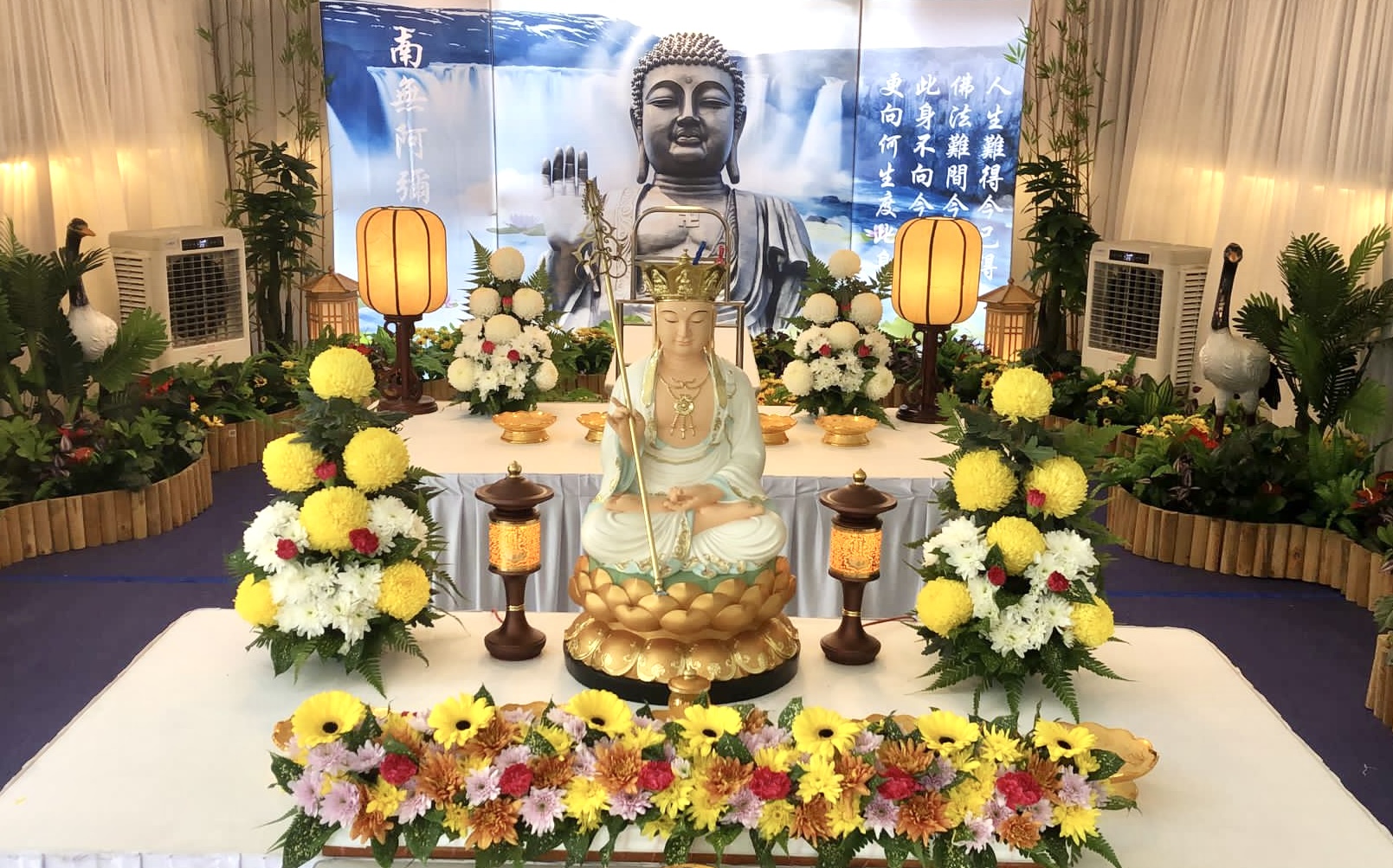
An altar is usually set up near the casket. This may include a Buddha image, incense, candles, flowers, fruits, and a photograph of the deceased. The arrangement should be respectful and properly organized, but it does not need to be excessive. In many cases, simplicity is entirely appropriate.
The wake and chanting ceremonies
The wake may be held at a funeral parlor, void deck, temple, or home, depending on regulations, family preference, and practical circumstances. During the wake, monks may be invited to chant sutras at specific times. These prayers are an important part of Buddhist funeral rites, as they are believed to help cultivate merit and direct compassionate intentions toward the deceased.
Visitors usually come to pay respects, offer condolences, and participate in prayer. In some families, incense offering is part of the paying-respects process. In others, the format is more restrained. It depends on the tradition being followed.
The length of the wake is also flexible. Three-day and five-day wakes are common, but shorter arrangements may be chosen when needed. Budget, venue limitations, family schedules, and religious advice all play a part. A dignified Buddhist funeral does not depend on length alone.
Offerings and merit-making
Food offerings, flowers, incense, and light are common symbolic offerings during Buddhist funerals. Their meaning is not simply ceremonial. They reflect impermanence, gratitude, and reverence.
Families may also perform acts of dana, or giving, such as donations to monks or charitable acts done in the name of the deceased. This is tied to the Buddhist belief that merit generated through wholesome actions can be dedicated to the departed. For some families, this spiritual aspect is more important than outward display.
The final funeral service
Before cremation or burial, there is usually a final prayer service. Monks may chant again, and family members may bow, offer incense, or make final respects before the casket is closed.
This is often one of the most emotional parts of the process. A well-coordinated funeral service helps the family move through this moment without added confusion. Clear sequencing, respectful guidance, and proper ceremonial timing make a real difference.
Cremation or burial
Most Buddhist funerals today involve cremation, though burial may still be chosen in some cases. Cremation timing depends on crematorium booking availability, religious preferences, and the overall funeral schedule.
At the crematorium, there may be a short final prayer before the cremation takes place. Some families prefer only close relatives to attend this stage, while others welcome a wider group of mourners. Neither approach is more correct than the other. It should reflect what the family can manage and what feels most appropriate.
Common Buddhist funeral customs families ask about
One of the most common questions is whether all Buddhist funerals require monks. In practice, many do include monks, but not every family follows the same level of formal religious involvement. If the deceased was devoted to temple practice, chanting by monks may be especially important. If the family is less observant, they may still choose selected rites that honor Buddhist beliefs without arranging a highly elaborate service.
Another question is about joss paper and symbolic items. These are often associated more strongly with Chinese traditional or Taoist customs, though some Buddhist families include overlapping cultural practices. This is where guidance matters. Religion and culture are closely connected in many households, but they are not identical. A professional funeral director can help families separate what is doctrinally Buddhist, what is customary, and what is optional.
Families also ask about the 49-day period. In many Buddhist traditions, prayers may continue after the funeral at set intervals, with the 49th day holding particular significance. The belief behind this observance is that continued merit-making and prayer can benefit the deceased during the transitional period after death. Some families arrange memorial prayers on the 7th, 21st, 35th, and 49th days, while others observe only selected dates.
Practical considerations when arranging a Buddhist funeral
Religious correctness matters, but so do logistics. Families often have to manage venue rules, booking times, transportation, permits, obituary decisions, guest flow, and budget, all while grieving.
That is why the planning side should be handled as carefully as the ceremonial side. A proper Buddhist funeral arrangement usually involves collection of the deceased, embalming or dressing, casket preparation, wake setup, altar arrangement, monk coordination, cremation booking, hearse transport, and funeral day management. When these details are coordinated properly, the family has more space to focus on remembrance and prayer.
Cost is another sensitive area. Buddhist funerals can range from simple to highly detailed, and pricing often depends on wake duration, venue, casket selection, monk offerings, transport, and ceremonial inclusions. Families should ask for clear itemization from the start. Transparent pricing helps prevent stress and uncertainty later.
For multicultural families, there may also be a need to balance Buddhist rites with the expectations of relatives from other faith backgrounds. This is more common than many people realize. A respectful arrangement can often accommodate different family needs without compromising the central funeral tradition.
Why clear guidance matters during bereavement
Buddhist funeral rites explained properly should do more than define rituals. It should help families understand what is essential, what is customary, and where there is room for flexibility.
In real situations, there is rarely one perfect formula. Some families want a traditional wake with full chanting ceremonies. Others need a shorter arrangement because relatives are overseas, costs must be controlled, or the deceased requested simplicity. What matters is that the service remains respectful, spiritually appropriate, and well managed.
This is where experienced support becomes especially valuable. A funeral team familiar with Buddhist practices can guide the family through immediate steps, coordinate religious elements correctly, and keep everything orderly at a time when even small decisions can feel overwhelming. For families seeking that balance of compassion, ceremonial respect, and practical coordination, providers such as Ang Brothers Funeral Services are often chosen because they can manage both the emotional and operational demands with clarity.
If you are arranging a Buddhist funeral, the most helpful starting point is not trying to know every ritual yourself. It is making sure the family has calm, reliable guidance so each step is carried out with dignity, care, and peace of mind.